
How to Reduce Packaging Costs Without Losing Quality
Rising operational costs are forcing food and beverage businesses to scrutinize every expense, with packaging often representing 10-15% of total product costs. The challenge lies in reducing these expenses without compromising the quality that keeps customers satisfied and products safe. Smart cost optimization in packaging requires a strategic approach that balances financial efficiency with product integrity.
Whether you’re running a coffee chain serving hundreds of hot beverage cups daily or managing a catering business requiring insulated food containers for catering, the principles of cost-effective packaging remain consistent: buy smart, choose right, and optimize usage.
Strategic Bulk Purchasing and Supplier Partnerships
The most immediate impact on packaging costs comes from procurement strategy. Establishing strong relationships with reliable suppliers can unlock significant savings through volume discounts and favorable terms.
Volume-Based Pricing Advantages
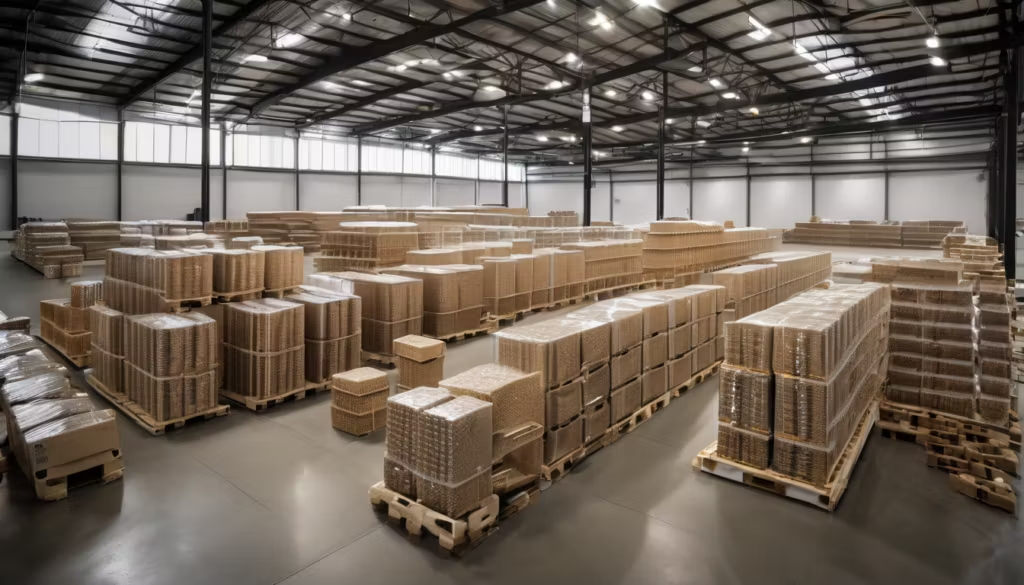
Bulk purchasing typically reduces per-unit costs by 15-25% compared to small quantity orders. For businesses using paper bowl supplier Indonesia services, ordering in larger quantities can mean the difference between paying premium prices and accessing wholesale rates. However, bulk buying requires careful balance:
- Calculate storage costs versus savings potential
- Assess cash flow impact of larger upfront investments
- Consider product shelf life and storage requirements
- Evaluate seasonal demand fluctuations
Long-Term Partnership Benefits
Building lasting relationships with suppliers often yields benefits beyond price reductions. Reliable partners provide consistent quality, priority service during high-demand periods, and flexibility in customization options. Choosing the right supplier involves evaluating their track record, quality standards, and ability to scale with your business growth.
Product Selection and Specification Optimization
Smart product selection can significantly impact costs without sacrificing functionality. Understanding the specific requirements of your application helps identify opportunities for optimization.
Right-Sizing Your Packaging
Using appropriately sized containers prevents waste and reduces costs. Oversized packaging increases material costs and storage requirements, while undersized options may lead to spillage and customer dissatisfaction. Consider these factors:
- Portion analysis: Match container size to actual serving sizes
- Stacking efficiency: Choose designs that maximize storage space
- Multi-purpose options: Select versatile containers suitable for multiple menu items
Material Selection Strategy
Different materials offer varying cost-performance ratios. For hot beverages, aluminium laminated cups provide excellent heat retention at competitive prices, while standard paper cups may suffice for cold drink cups applications. The key is matching material properties to actual needs rather than over-specifying.
For delivery services, investing in quality thermal insulation bags might seem expensive initially, but they protect food quality and reduce complaints, ultimately saving money through improved customer satisfaction and reduced waste.
Inventory Management and Waste Reduction
Efficient inventory management directly impacts packaging costs through reduced waste, optimized cash flow, and improved storage efficiency.
Just-in-Time Inventory Principles
Implementing just-in-time inventory reduces storage costs and minimizes waste from damaged or expired packaging materials. This approach requires:
- Accurate demand forecasting based on historical data
- Reliable supplier delivery schedules
- Flexible storage solutions for varying inventory levels
- Contingency plans for supply disruptions
Proper Storage Practices
Maintaining packaging quality through proper storage prevents costly waste and ensures consistent performance. Proper storage techniques for paper containers include climate control, protection from moisture, and organized rotation systems to prevent damage and maintain material integrity.
Customization and Branding Efficiency
Custom printing and branding add value but also increase costs. Strategic approaches to customization can maintain brand impact while controlling expenses.
Smart Design Choices
Simplifying designs reduces printing costs without diminishing brand recognition. Consider these cost-effective approaches:
- Single-color printing instead of full-color designs
- Strategic placement of logos for maximum impact
- Standard sizes that accommodate existing printing equipment
- Designs that work across multiple product types
Volume-Based Customization
Custom printing becomes more cost-effective at higher volumes. Businesses can achieve economies of scale by:
- Standardizing designs across product lines
- Coordinating orders to meet minimum quantity requirements
- Planning seasonal or promotional designs well in advance
Technology and Process Improvements
Investing in technology and process improvements can yield long-term cost savings through increased efficiency and reduced waste.
Automated Dispensing Systems
Automated dispensing systems for cups, lids, and containers reduce waste by providing consistent portions and preventing over-dispensing. While initial investment costs exist, savings through reduced waste typically justify the expense within 12-18 months.
Staff Training and Efficiency
Proper staff training reduces packaging waste and ensures optimal usage. Training should cover:
- Appropriate container selection for different menu items
- Efficient packing techniques to minimize material usage
- Proper handling to prevent damage and waste
- Quality control procedures to maintain standards
Measuring and Monitoring Cost Effectiveness
Continuous monitoring of packaging costs helps identify opportunities for further optimization and ensures that cost-reduction measures maintain their effectiveness over time.
Key Performance Indicators
Track these metrics to evaluate packaging cost efficiency:
- Cost per unit served across different packaging types
- Waste percentage relative to total packaging purchases
- Customer satisfaction scores related to packaging quality
- Storage and handling costs as percentage of total packaging expense
Regular analysis of these metrics reveals trends and opportunities for continuous improvement. Comprehensive packaging cost strategies require ongoing evaluation and adjustment based on business growth and market changes.
Conclusion
Reducing packaging costs without compromising quality requires a comprehensive approach that encompasses supplier relationships, product selection, inventory management, and process optimization. Success comes from understanding your specific needs and matching them with appropriate solutions rather than simply choosing the cheapest options available.
The most effective cost reduction strategies focus on long-term value rather than short-term savings. Quality packaging protects your products, enhances customer experience, and ultimately supports business growth. By implementing these proven strategies, food and beverage businesses can achieve significant cost savings while maintaining the packaging quality that customers expect.
Ready to optimize your packaging costs without sacrificing quality? Contact SEAL Indonesia today for premium food packaging solutions that balance cost-effectiveness with superior performance. Our expert team can help you identify the right products and strategies for your specific business needs.